
How to Tell If Your Austin Tree Is Dead or Just Summer-Stressed
How to Tell If Your Austin Tree Is Dead or Just Summer-Stressed
Every August, Austin homeowners stare at trees that look terrible and face the same question: is this tree dying, or is it just having a hard summer? The answer has real consequences. A dead or structurally failing tree left in place becomes a liability. A stressed-but-alive tree removed unnecessarily costs money, takes years to replace, and eliminates shade and property value. Getting the diagnosis right matters — and there are a few reliable tests that anyone can do before calling an arborist.
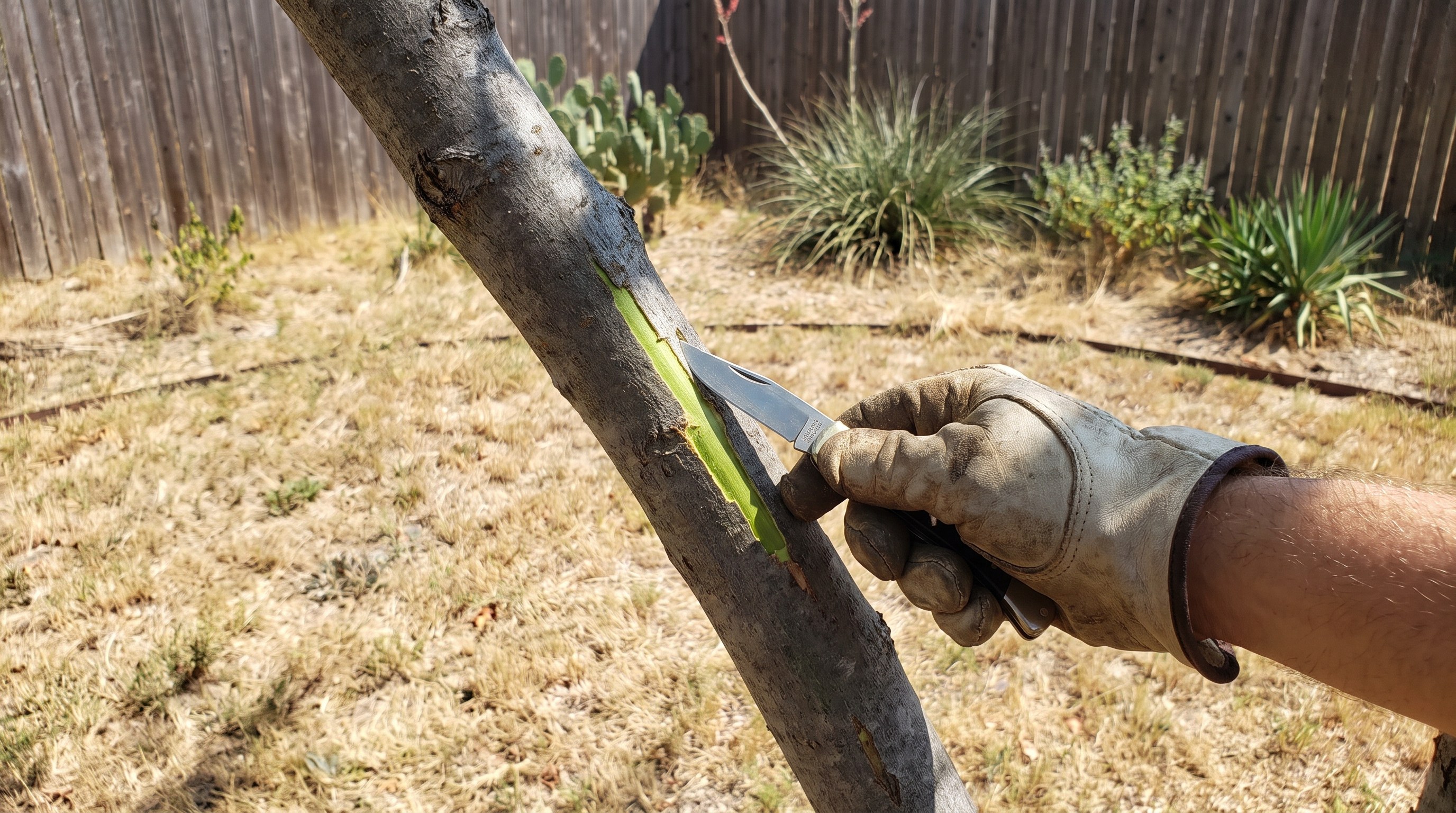
The Scratch Test
How to Do It
Find a small twig on a branch that looks dead — no leaves, brittle-looking. Using your fingernail or a pocket knife, scratch through the outer bark on the twig. Look at the layer immediately underneath. If it’s green or white and slightly moist, the branch is alive. If it’s brown and dry all the way through, that branch is dead. Work your way from small branches inward toward larger ones and the trunk. A tree with dead outer twigs but living inner branches and trunk is stressed, not dead. A tree where even the main scaffold branches and trunk show brown, dry tissue throughout is in serious trouble.
What the Test Can’t Tell You
The scratch test tells you whether tissue is currently alive — it doesn’t tell you why it’s dying or whether the tree has a realistic path to recovery. A tree with living cambium throughout its trunk but 60 percent canopy dieback may survive with intervention, or the underlying cause may continue to progress regardless. The test is a first step, not a full diagnosis.
Signs That Indicate a Serious Problem
No Green Anywhere
A tree with zero green tissue on the scratch test across its trunk and major scaffold branches has no viable cambium to support recovery. This tree is dead or functionally dead. At this stage, the question isn’t whether to remove it but when — and how urgently, based on what’s under it.
Fungal Growth at the Base
Mushrooms or conks — shelf-like fungal growths — at the base of a tree or on the root flare indicate active wood decay in the root system or lower trunk. This is a structural concern independent of whether the tree appears healthy above. A tree with a full canopy but significant fungal activity at the base may be at risk of sudden failure. This symptom always warrants a professional structural assessment.
Bark Separation from the Trunk
Bark that peels away easily in large sheets — not the normal exfoliating bark of species like sycamore or crape myrtle — indicates that the cambium underneath has died and the bark has lost its attachment. This is a sign of significant decline or death in that trunk section.
Signs of Stress That Trees Can Recover From
Leaf scorch on outer canopy leaves, partial leaf drop during extended drought, midday wilting that recovers by evening, and minor tip dieback on outer branches are all normal summer stress responses for trees that are fundamentally healthy. These symptoms on an otherwise structurally sound tree with living cambium throughout are manageable. Improve soil moisture, ensure the mulch ring is adequate, and give the tree time. Most Austin trees that look rough in August look dramatically better by October. If you’re uncertain whether what you’re seeing is recoverable stress or genuine decline, Agave Tree Services offers straightforward assessments across Austin — we’ll give you an honest read on what you’re working with.
Read More
Get Started with Professional Tree Removal Today
Call us now or request a quote online for the best tree service in Austin.


