
Sunscald and Heat Damage on Austin Trees: What It Looks Like and How to Respond
Sunscald and Heat Damage on Austin Trees: What It Looks Like
Austin homeowners often spot something wrong with a tree in July — bark that looks cracked or discolored, leaves with brown margins or bleached patches, a section of canopy that seems to have died — and immediately worry about disease. In many cases, what they're seeing is direct physical damage from radiant heat and solar radiation. Sunscald and heat damage are common in Central Texas, particularly on young or recently transplanted trees, and on mature trees that have had their canopy thinned or raised. Understanding the difference between heat damage and disease determines the right response.
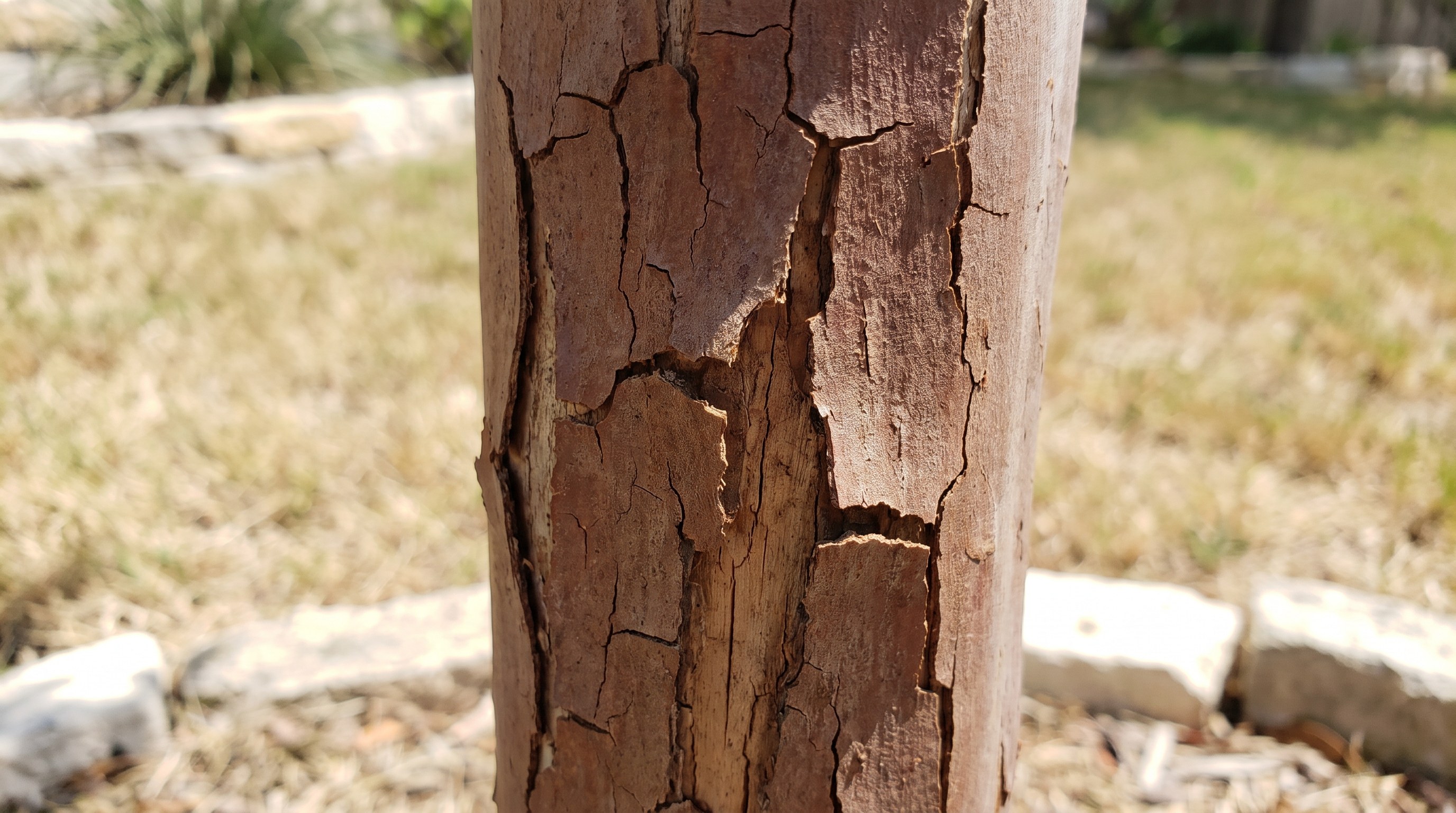
What Sunscald Is and How It Happens
The Mechanism
Sunscald occurs when bark tissue is exposed to direct solar radiation intense enough to damage the cambium — the thin layer of living cells just beneath the bark that transports water and nutrients throughout the tree. In Austin's summer, southwest-facing trunk surfaces can reach 150 degrees Fahrenheit or higher under direct afternoon sun. This is hot enough to kill cambium cells, causing the bark above the damaged tissue to eventually crack, discolor, and slough off.
Who Gets It
Sunscald is most common on trees with smooth, thin bark — young trees, recently transplanted trees, and species like Mexican sycamore, red maple, and young live oaks. It also occurs frequently on any tree whose canopy has been raised or thinned, suddenly exposing trunk sections that were previously shaded by lower branches. The southwest side of the trunk is most affected because it takes the full brunt of peak afternoon heat.
Leaf Scorch vs. Disease
What Normal Heat Scorch Looks Like
Leaf scorch from summer heat typically appears as browning at the leaf margins and tips — the edges and points of the leaf die while the tissue near the midrib and major veins stays green longer. It's usually most visible on the south and west sides of the canopy where leaves receive the most direct sun and heat load. Leaves affected this way often curl slightly. This is cosmetic damage and does not indicate a sick tree — it indicates a tree under heat stress doing exactly what trees do to manage their water budget.
When It Might Be Something Else
Browning that starts at the vein rather than the margin, browning concentrated in one section of the canopy rather than distributed across exposed leaves, leaves dropping while still partially green, or any combination of browning with sudden rapid dieback — these patterns suggest something beyond heat scorch. Vascular diseases like oak wilt move through the conductive tissue and produce distinctive vein-based patterns. Leaf drop during summer that's concentrated in one area warrants a professional look.
What to Do About Sunscald
For Young and Newly Planted Trees
Young trees in full sun should have their southwest-facing trunk shaded during their first two to three summers. Tree wrap applied in a spiral from ground level to the first major branch — removed after each summer — provides meaningful protection. White tree wrap reflects heat rather than absorbing it. This one step can prevent sunscald entirely during the establishment period when trees are most vulnerable.
For Established Trees
Established trees that develop sunscald damage on exposed trunk sections usually survive the damage but are left with permanent scarring. The wound should be kept clean and dry — don't apply wound sealant, which traps moisture. Monitor for secondary fungal infection in the wound, particularly after wet periods. If the damaged area is large or extends around more than a third of the trunk circumference, a professional assessment of the tree's structural integrity is warranted. At Agave Tree Services, we evaluate sun and heat damage as part of our summer health assessments across Austin.
Read More
Get Started with Professional Tree Removal Today
Call us now or request a quote online for the best tree service in Austin.


