
Deep Root Fertilization: Does It Actually Work for Austin Trees?
Deep Root Fertilization: Does It Actually Work for Austin Trees?
Deep root fertilization is one of the most commonly recommended — and most frequently misunderstood — tree services in Austin. Some companies offer it as a near-universal treatment. Others dismiss it entirely. The honest answer is more nuanced: deep root fertilization works well in specific situations and does little in others. Here’s what you actually need to know.
What Deep Root Fertilization Actually Is
The Process
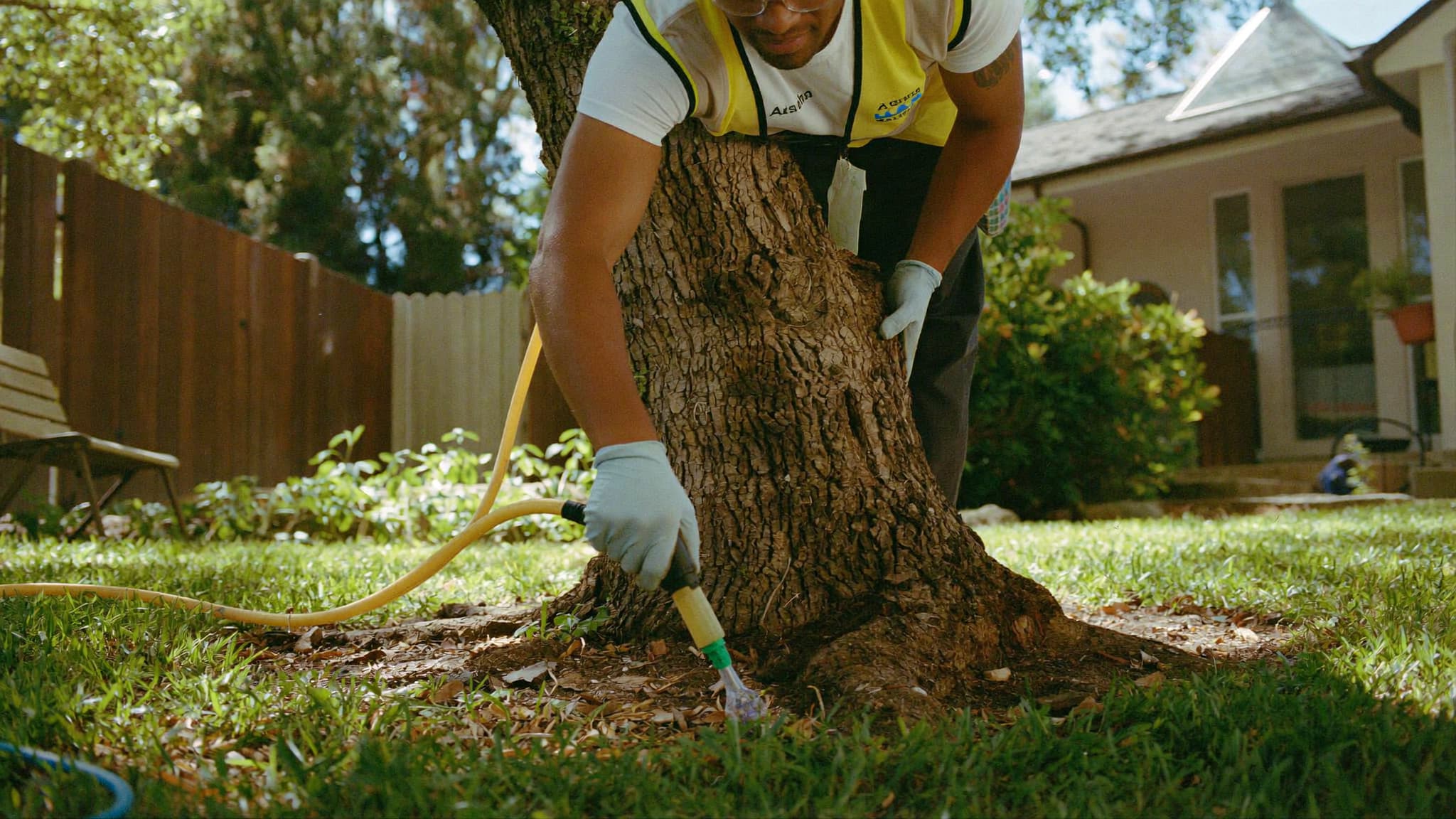
Deep root fertilization involves injecting a liquid fertilizer solution directly into the soil within the root zone using a pressurized probe inserted to a depth of eight to twelve inches. The injection points are spaced in a grid pattern across the root zone, ensuring relatively even distribution. The process also aerates the soil at each injection point — which in compacted Austin clay is itself beneficial, independent of the fertilizer.
What Goes In
The composition of the fertilizer solution varies by company and application. A well-designed mix for Austin conditions typically includes a balanced macro-nutrient base (nitrogen, phosphorus, potassium), micronutrients that Austin’s alkaline soils make unavailable through standard soil application (particularly iron and manganese), and often beneficial soil microorganisms or humic acids that support root-zone biology. The specific formulation matters as much as the application method.
When It Works Well
Trees in Compacted Urban Soils
The biggest benefit of deep root fertilization in Austin isn’t the fertilizer itself — it’s bypassing compacted surface soil to deliver nutrients and aeration directly to the active root zone. Austin’s urban soils, particularly in established neighborhoods with heavy foot traffic or lawn areas, are often so compacted that surface-applied fertilizers barely penetrate. The injection method delivers inputs where roots can actually access them.
Trees Showing Nutrient Deficiency Symptoms
Trees displaying classic deficiency symptoms — interveinal chlorosis (yellowing between leaf veins while veins stay green), marginal leaf burn, or reduced shoot growth — respond well to a properly formulated deep root treatment. In Austin’s high-pH soils, iron and manganese chlorosis are extremely common and respond directly to chelated micronutrient injection.
When It’s Unlikely to Help
Trees in Decline from Structural or Disease Causes
Fertilizing a tree that’s declining because of oak wilt, root rot, girdling roots, or structural damage won’t address the underlying problem. In some cases, adding nitrogen to a stressed tree can actually make things worse by stimulating new growth the tree doesn’t have the root system to support. A proper diagnosis of what’s actually causing decline should come before any fertilization recommendation.
Healthy Trees in Good Soil
A large, vigorous, visibly healthy tree growing in reasonable soil conditions doesn’t need annual fertilization. Many trees — particularly established native oaks and elms in Austin — do fine with no fertilization at all. Fertilization is a targeted response to a real condition, not a routine maintenance product every tree needs every year. At Agave Tree Services, we assess soil conditions and tree health before recommending deep root treatment — and we’ll tell you if your trees don’t need it.
Read More
Get Started with Professional Tree Removal Today
Call us now or request a quote online for the best tree service in Austin.


