
What to Do Immediately After a Tree Branch Falls on Your Property
What to Do Immediately After a Tree Branch Falls on Your Property
A large branch comes down — maybe after a summer storm, maybe on a calm day when the wood was simply too far gone to hold. The adrenaline is real. Here's how to slow down, assess the situation correctly, and make decisions that protect you, your family, your property, and your trees. The order of operations matters.
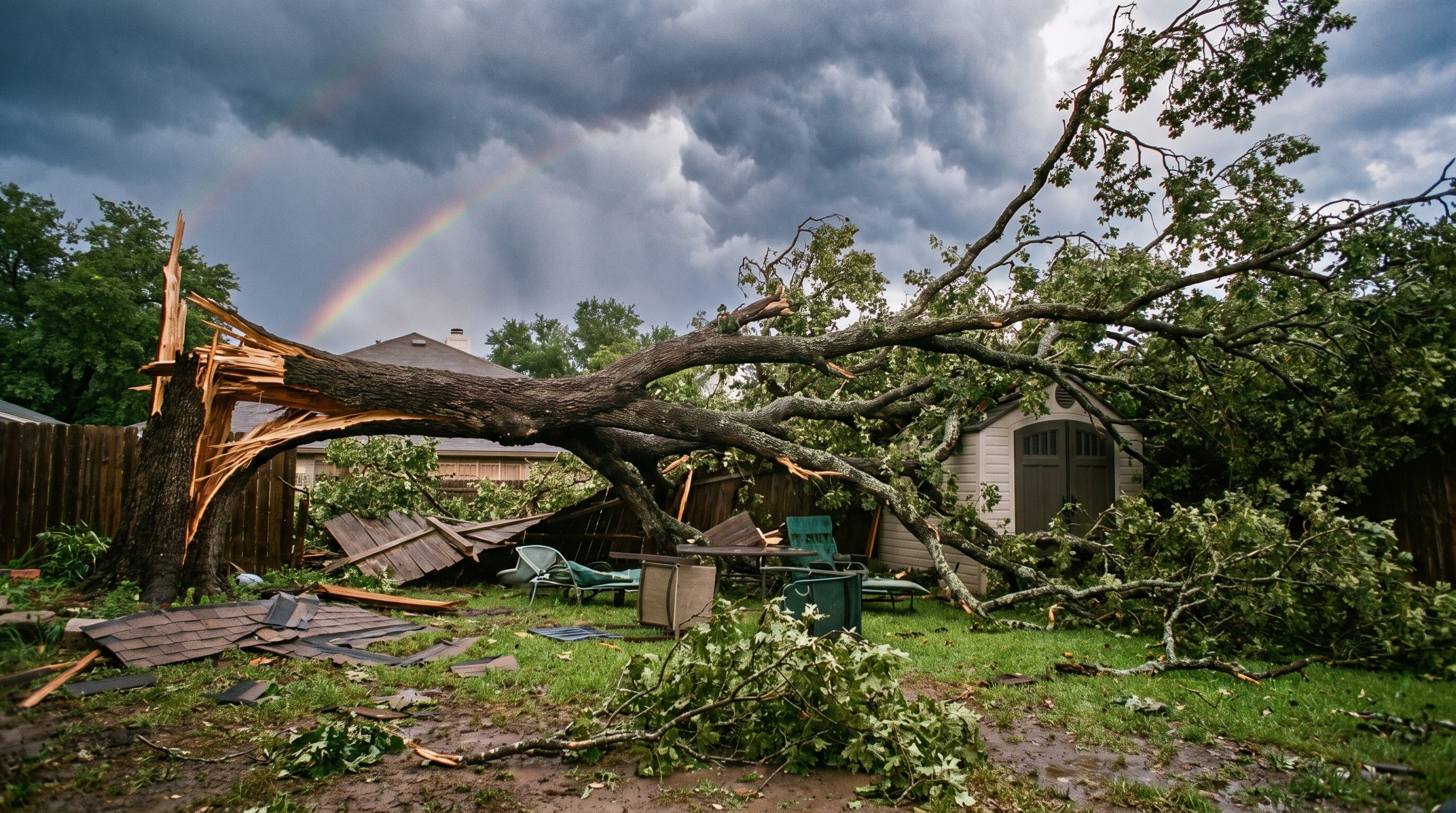
Step One: Safety Before Anything Else
Check for Utility Involvement
Before approaching a fallen branch, look up. If the branch has contacted or is near power lines, do not touch the branch, do not step near it, and do not allow anyone else to. Call 911 and Austin Energy immediately. A branch in contact with an energized line can electrify the ground around it. This is not a situation for improvisation — it's one where you step back and wait for professionals.
Check for Secondary Hazards
A fallen branch may have destabilized other limbs above it. Before walking under the affected tree, look carefully for hanging limbs — branches caught on other branches above, suspended and waiting to fall. These are called widow-makers for a reason. If you see anything hanging, keep everyone back from the entire drip line of the tree until a qualified arborist can assess and remove the hazard.
Step Two: Document Before You Clean Up
Why This Matters for Insurance
If the branch caused property damage — to a structure, vehicle, fence, or anything else — photograph everything before moving a single piece of debris. Take wide shots showing the fallen branch and the damage, close-up shots of the damage itself, and photos of the remaining tree showing where the break occurred. This documentation is essential for your insurance claim and for determining whether the damage was caused by a healthy branch failure or a defect that was or should have been known.
Step Three: Small Debris vs. Professional Removal
What You Can Handle Yourself
Small branches — under three to four inches in diameter, lying completely on the ground, not entangled in anything above — are generally safe for a homeowner to cut up and remove with a chainsaw or hand saw. Work from the outside of the branch in, cutting manageable sections rather than trying to move the whole piece. Never cut a branch that's under tension — a branch bent against the ground or pinned under something else can spring violently when cut.
When to Call an Arborist
Any branch over six inches in diameter, any branch that's still partially attached and hanging, any situation involving a roof, fence, or vehicle, and any branch that came from a tree showing visible structural problems — these are all professional jobs. The risk of injury from an unstable, heavy piece of wood is significant, and the cost of a professional removal is almost always far less than an emergency room visit or additional property damage from a botched DIY attempt.
Step Four: Assess the Tree
After the fallen branch is addressed, the tree that dropped it deserves a professional look. Branch failures don't always come from storm damage — they also come from internal decay, structural weakness at the attachment point, and root system problems that compromise the whole tree. A certified arborist can identify whether the failure was an isolated event or a warning sign of broader structural issues. Agave Tree Services responds to storm and branch failure calls across Austin. If a branch has come down on your property, we're happy to assess both the immediate situation and the long-term health of the tree.
Read More
Get Started with Professional Tree Removal Today
Call us now or request a quote online for the best tree service in Austin.


